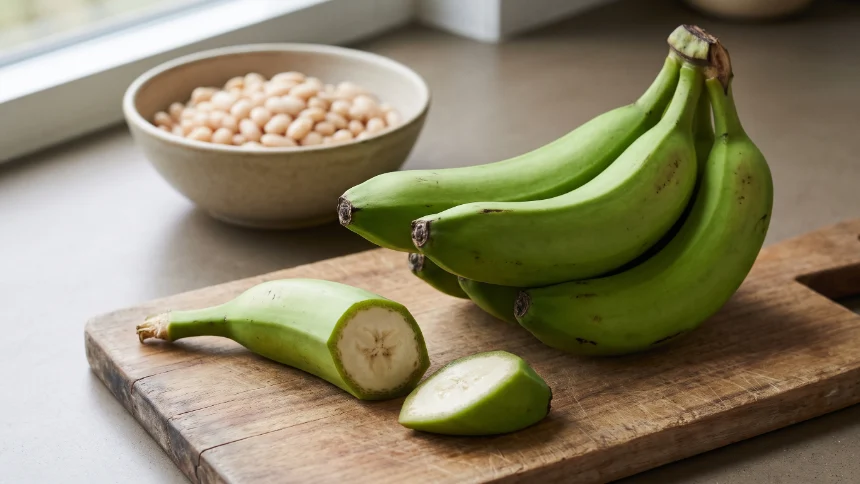
Green bananas, beans, and certain cooked-and-cooled starchy foods contain a type of carbohydrate called resistant starch. Unlike most starch, it resists digestion in the small intestine and reaches the large intestine, where gut bacteria can ferment it.
Researchers are studying whether this process may influence body fat, insulin sensitivity, and other aspects of metabolic health. Some human trials have reported encouraging results, including changes in visceral fat, the fat stored deep inside the abdomen around internal organs.
But does eating more resistant starch actually help reduce belly fat? The answer is more nuanced than many online headlines suggest.
What Is Resistant Starch?
Most dietary starch is broken down into sugars that the body can absorb in the small intestine. Resistant starch behaves differently: it largely escapes digestion there and travels to the colon.
Gut bacteria can ferment resistant starch, producing short-chain fatty acids and other metabolites. These substances may influence gut function and aspects of metabolism, although their effects depend on the food, the individual, and the wider diet.
Resistant starch occurs naturally in foods such as legumes, green bananas, and some whole grains. It can also form when certain starchy foods are cooked and then cooled. The amount varies with the food type, ripeness, preparation method, and storage conditions.
Why Are Scientists Interested in Visceral Fat?
Visceral fat is stored deep within the abdomen, surrounding organs such as the liver and intestines. It differs from the subcutaneous fat that sits just beneath the skin.
Higher amounts of visceral fat are associated with an increased risk of conditions such as type 2 diabetes and cardiovascular disease. However, body shape alone cannot reliably tell you how much visceral fat you have, and a larger waist measurement does not provide a precise measurement of internal fat.
Researchers are interested in whether dietary changes can improve visceral fat and other metabolic markers, even when changes on the scale are modest. Resistant starch is one candidate, but it is still being studied rather than established as a stand-alone treatment.

What Have Human Trials Found?
Some randomized controlled trials have examined resistant starch supplementation and metabolic health. In a 2024 randomized trial published in Nature Metabolism, researchers reported improvements in body weight and metabolic measures among participants receiving resistant starch, alongside changes in the gut microbiome.
These results are scientifically interesting because randomized trials can provide stronger evidence than personal testimonials or uncontrolled observations. However, a trial’s findings apply to the participants, dose, duration, and intervention that were actually studied. They do not establish that every resistant-starch food will produce the same effect.
It is also important to distinguish a reduction in visceral fat measured by imaging from a change in body weight or waist circumference. These measures are related, but they are not interchangeable.
One study cannot establish that resistant starch will reliably reduce visceral fat in every person, prevent diabetes, or lower the risk of cardiovascular events. Larger and longer trials are needed to clarify the size and durability of any benefits.
How Might Resistant Starch Affect Metabolism?
One proposed pathway involves the gut microbiome. When bacteria ferment resistant starch, they produce short-chain fatty acids, including acetate, propionate, and butyrate. These compounds participate in several processes related to gut health and metabolic signaling.
Researchers are investigating whether these changes may influence insulin sensitivity, appetite regulation, energy use, and fat storage. Findings from laboratory and animal studies help develop these hypotheses, but they cannot by themselves prove that the same mechanisms explain outcomes in humans.
People also differ in their gut microbial communities. That variation may help explain why the same dietary intervention produces different responses. However, microbiome tests are not yet a reliable way for an individual to predict exactly how much fat they will lose from resistant starch.
Which Foods Contain Resistant Starch?
You can obtain resistant starch from ordinary foods without following a specialized supplement protocol.
- Green bananas: Less-ripe bananas generally contain more resistant starch than fully ripe bananas, although the amount varies with ripeness.
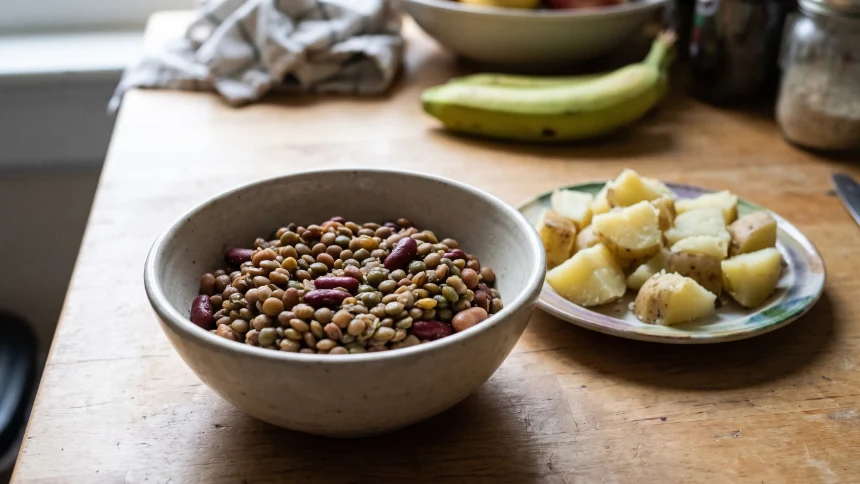
- Beans and lentils: These provide a mixture of fiber, resistant starch, protein, and other nutrients.
- Cooked-and-cooled potatoes or rice: Cooling can increase the formation of retrograded starch. The amount depends on the food and preparation method, and reheating does not necessarily remove all of it.
- Whole grains: Some grains and grain-based foods contribute resistant starch as part of a varied diet.
These foods differ in their overall nutritional value. Beans and lentils, for example, also provide protein and micronutrients. It is therefore more useful to consider the whole dietary pattern than to focus on resistant starch content alone.
Does More Resistant Starch Mean More Fat Loss?
Not necessarily. A larger dose does not guarantee a larger benefit, and the amount used in a clinical trial should not automatically become a recommended daily target.
Increasing resistant starch quickly may cause gas, bloating, abdominal discomfort, or changes in bowel habits, particularly in people who are sensitive to fermentable carbohydrates. Gradually increasing fiber-rich foods and paying attention to personal tolerance may be more comfortable than making a sudden, large change.
People with digestive conditions or specific dietary restrictions may need individualized advice. Anyone considering a concentrated supplement should also check the product’s ingredients and discuss its use with a qualified healthcare professional if they have relevant medical conditions or concerns.
There is currently no universally established resistant-starch dose proven to reduce visceral fat or prevent metabolic disease in all adults. Nor is there a validated home test that can guarantee whether someone will respond.
What Else Helps Reduce Visceral Fat?
Resistant starch is only one part of the broader research into metabolic health. Exercise has a substantial evidence base: a systematic review and network meta-analysis of 84 randomized controlled trials found that aerobic exercise, resistance training, combined training, and high-intensity interval training could reduce visceral adipose tissue in adults with overweight or obesity.
That does not mean everyone needs intense workouts. The most appropriate activity depends on current fitness, medical conditions, mobility, and personal preference. Building a sustainable routine is generally more practical than pursuing an extreme short-term protocol.
A balanced eating pattern, adequate sleep, regular movement, and management of conditions such as high blood pressure or diabetes also matter for long-term metabolic health. No single food is a substitute for these broader habits or for prescribed treatment.
How to Interpret the Headlines
Claims that one ingredient melts belly fat, works independently of every other dietary factor, or produces a predictable result within eight weeks go beyond what the evidence can guarantee.
When evaluating a study, look at who participated, what form and amount of resistant starch they received, how long the trial lasted, how visceral fat was measured, and whether the findings have been replicated. Also check whether the study measured a meaningful health outcome or only a short-term laboratory marker.
Human trials are valuable, but their findings should be interpreted in context. Results from a specific supplement cannot automatically be applied to green bananas, cooled rice, or every commercial product.
The Bottom Line
Resistant starch is a promising area of nutrition research, and some human studies suggest it may improve selected metabolic measures. But the evidence is not strong enough to promise a specific amount of visceral fat loss or to recommend it as a stand-alone weight-loss treatment.
If you enjoy foods that contain resistant starch, including beans, lentils, and less-processed plant foods, they can fit into a balanced eating pattern. Treat resistant starch as one possible part of healthy nutrition—not a shortcut—and judge new claims by the quality of the human evidence behind them.