
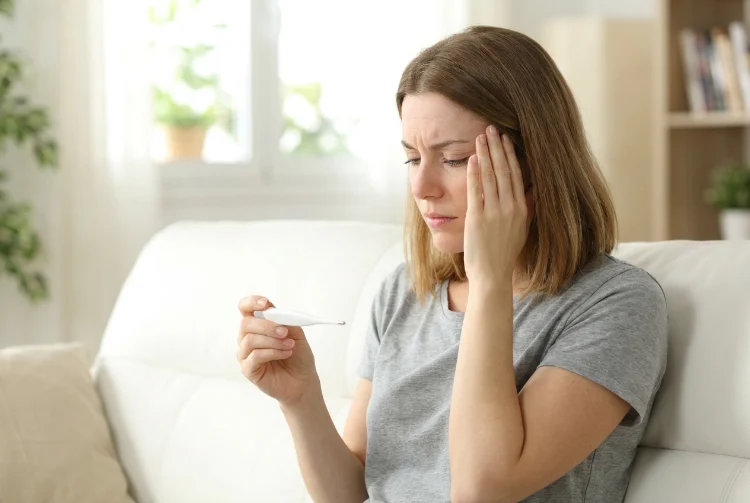
COVID-19 remains a health risk for seniors, immunocompromised people and anyone living with chronic illnesses like heart disease, diabetes or asthma. Even young, healthy adults may develop long COVID with lasting cognitive damage after infection.
Summer brings unique confusion between COVID and seasonal allergies. Pollen irritation, travel fatigue and cold-like discomfort often make people dismiss viral symptoms as harmless seasonal reactions. Experts explain warm weather does not stop virus transmission; crowded indoor air-conditioned spaces and frequent travel accelerate spread. Many people ignore mild discomfort, continue daily activities and unknowingly pass the virus to others.
Common COVID Symptoms Seen In Summer
Infectious disease specialists list the consistent core signs of current COVID strains: fever or chills, shortness of breath, sore throat, nasal congestion, runny nose, persistent fatigue, headaches, muscle aches, and altered taste or smell. Symptom severity varies widely—some people only have mild discomfort, while high-risk groups face severe illness. A smaller group also develops gastrointestinal upset such as nausea and diarrhea, which are easy to misattribute to food issues rather than viral infection.
Three Key Symptom Combinations Requiring Immediate Testing

Stuffy nose, throat pain and headaches overlap heavily with hay fever, but three specific combinations signal you should get a COVID test right away to avoid spreading virus:
- Seasonal allergy-like symptoms paired with persistent fever
- Nasal congestion or cough accompanied by widespread body aches
- Any mild cold symptoms plus shortness of breath
Even isolated diarrhea warrants testing to rule out COVID, especially during salad-heavy summer seasons when gut bugs are common.
Critical Emergency Reminder
Shortness of breath is not exclusive to COVID. If you struggle to draw full breaths, seek medical care without delay—it may signal other life-threatening conditions beyond viral infection.
Daily Protection Tips

- Get updated seasonal COVID vaccine or booster Annual variant-matched vaccines lower severe illness risk drastically. Seniors, immunocompromised patients, pregnant people and those with chronic conditions hold highest priority for shots; flu shots are also recommended alongside COVID vaccines.
- Mask in crowded indoor venues when feeling unwell
- Stay home and isolate once symptoms appear
- Maintain frequent hand washing
- Prioritize sleep, balanced meals and stress control to support immune function
Fast Symptom Relief & Antiviral Guidance
If your test returns positive, act quickly especially if you are 50+ or live with chronic health issues:
- Speak to your provider early for prescription antiviral pills. These medications reduce the chance of mild cases progressing to severe illness and must be taken within 5–7 days of first symptoms.
- Over-the-counter drugs temporarily soothe congestion, pain and fever but do not target the virus itself.
Post-Exposure Prevention
Prescription oral medication XOCOVA can lower infection risk after COVID exposure for people aged 12 and older, if taken within 72 hours of contact. For active symptomatic infection, Paxlovid shortens recovery time significantly. Basic self-care including steady hydration, adequate rest and targeted throat/congestion remedies eases daily discomfort through recovery.
Final Takeaway
Summer allergies mask COVID symptoms easily, creating unrecognized transmission chains. Recognize the three telltale symptom groups and test promptly when they appear. Vaccination, basic hygiene and early antiviral intervention keep both yourself and surrounding people safe from severe viral illness and long COVID complications.