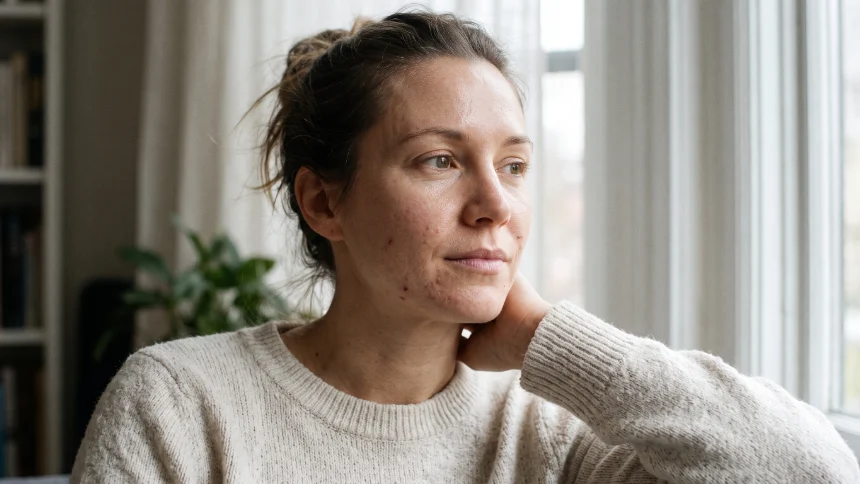
Acne is often associated with the teenage years, but breakouts can continue well into adulthood or appear for the first time in a person’s 30s, 40s, or later. For adults, recurring pimples can be particularly frustrating when the products that once worked no longer help—or when an elaborate skincare routine seems to make things worse.
Adult acne is not necessarily a sign of poor hygiene. It can involve clogged pores, excess oil, inflammation, hormonal changes, medications, and individual susceptibility. Understanding these factors can help you choose a more sensible routine instead of trying every new product that promises clearer skin.
Why Can Acne Continue Into Adulthood?
Acne develops when hair follicles become clogged with oil and dead skin cells. Inflammation and the activity of Cutibacterium acnes, a bacterium normally found on the skin, can contribute to the development of pimples. Different types of acne can look different, ranging from blackheads and whiteheads to inflamed bumps and deeper, painful lesions.
Hormonal fluctuations can influence oil production. Some adults notice breakouts around their menstrual cycle, during pregnancy-related hormonal changes, or around perimenopause. However, adult acne does not automatically mean that a person has a hormone disorder. Many cases occur without a clearly identifiable underlying medical condition.
Genetics can also influence how prone someone is to acne. Certain cosmetics, hair products, medications, and friction from equipment or clothing may contribute to breakouts in some people. The combination of factors varies from person to person, which helps explain why one routine may work well for one adult and poorly for another.

Can Washing More Often Make Acne Worse?
It is tempting to respond to breakouts by washing more frequently, scrubbing harder, or using several exfoliating products at once. But acne is not simply dirt trapped in the pores, and aggressive cleansing does not remove all the factors involved.
Harsh cleansers, rough scrubs, frequent exfoliation, and overlapping active ingredients can irritate the skin. This may lead to dryness, redness, stinging, and peeling. Irritation can also make it harder to continue using an otherwise helpful acne treatment.
For most people, a gentle cleanser used in the morning and evening—and after heavy sweating when needed—is a reasonable starting point. Use your fingertips rather than abrasive tools, rinse thoroughly, and avoid repeatedly washing your face throughout the day.
Moisturizer can still be useful for acne-prone skin. Look for products labeled non-comedogenic, meaning they are formulated to be less likely to clog pores. The right moisturizer can help reduce dryness from acne treatments without requiring a complicated routine.
Which Ingredients Can Help With Mild Acne?
Different ingredients target different aspects of acne. Choosing one that fits your type of breakout is usually more useful than buying several products at once.
Benzoyl peroxide helps reduce acne-associated bacteria and can be useful for inflamed pimples. It may cause dryness or irritation and can bleach towels, pillowcases, and clothing. Starting with a lower-strength product may be easier to tolerate.
Salicylic acid helps loosen the buildup of dead skin cells inside pores. It may be useful for blackheads and whiteheads, although it can cause irritation, particularly when combined with other exfoliating products.
Topical retinoids, such as adapalene, help prevent clogged pores and are commonly used to treat acne. They can cause dryness, redness, and peeling, especially at the beginning. Use them according to the product instructions or a clinician’s advice rather than applying more in an attempt to speed up results.
Azelaic acid can help with certain acne lesions and lingering dark marks after a breakout. It may be an option for people who need an alternative approach, although individual tolerance varies.
These ingredients are not interchangeable, and more is not always better. If you are starting an over-the-counter treatment, introduce one new active ingredient at a time and follow its directions. Give a suitable treatment several weeks to work rather than changing products every few days.

Why a Complicated Routine Can Backfire
Combining multiple acne products without a plan can make it difficult to identify what is helping and what is causing irritation. For example, using an exfoliating acid, a retinoid, and a strong acne wash together may leave the skin uncomfortable without delivering better results.
A practical routine can be simple:
Morning: Cleanse gently, apply a suitable moisturizer, and use broad-spectrum sunscreen with SPF 30 or higher. If you use a morning acne treatment, follow its instructions and consider how it fits with the rest of your routine.
Evening: Remove makeup and sunscreen, cleanse gently, and apply your chosen acne treatment as directed. Finish with moisturizer if needed.
This is a starting framework, not a prescription for everyone. Some treatments are intended for once-daily use, while others require different instructions. Avoid adding several new products at the same time, and scale back irritating products if your skin becomes persistently uncomfortable.
Does Adult Acne Always Mean Hormone Imbalance?
No. Hormones can influence acne, but breakouts alone are not enough to diagnose a hormone problem. Adult acne can occur even when routine hormone levels are normal.
Medical assessment may be particularly helpful when acne appears alongside other new symptoms, such as irregular menstrual periods, increased facial hair, or scalp hair thinning. A clinician can decide whether further evaluation is appropriate based on the full history and examination.
Do not stop a prescribed medication on your own because you suspect it is causing acne. If breakouts begin after starting a medicine or changing a dose, discuss the timing with the prescribing professional. They can assess whether the medication may be contributing and whether alternatives are appropriate.
When Should You See a Dermatologist?
Over-the-counter products may help some mild cases, but they are not enough for every type of acne. Consider professional care if you have deep or painful lumps, developing scars, widespread inflammation, or persistent breakouts that do not improve with a consistent routine.
Early assessment matters when acne is leaving scars or causing significant distress. A dermatologist can tailor treatment to the severity and pattern of the condition. Depending on the situation, options may include prescription topical combinations, oral medication, or hormonal treatment for selected patients.
Antibiotics should not be used casually or indefinitely for acne. Clinical guidelines recommend using them thoughtfully, generally alongside other treatments when appropriate, to improve outcomes and limit antibiotic resistance. Oral isotretinoin may be considered for severe, scarring, or treatment-resistant acne, but it requires careful medical supervision.
If you are pregnant, trying to become pregnant, or could become pregnant, consult a healthcare professional before using acne medication. Some treatments, including topical and oral retinoids, require particular caution or avoidance during pregnancy.

What About Picking Pimples or Using Home Remedies?
Squeezing or picking at pimples can increase inflammation and raise the risk of scarring or persistent dark marks. If a blemish is painful or deep, trying to force it to the surface is unlikely to solve the underlying problem.
Toothpaste, lemon juice, and harsh household ingredients are not reliable acne treatments and may irritate or injure the skin. A product being natural or easy to find at home does not mean it is safe to apply to inflamed skin.
If you want to simplify your routine, focus on gentle cleansing, a suitable moisturizer, sun protection, and an evidence-based acne treatment that fits your needs. Avoid changing everything at once, so you can better judge how your skin responds.
Clearer Skin Usually Takes a Consistent Plan
Adult acne can be persistent, but it is treatable. The most helpful approach depends on the type of breakout, its severity, your skin’s tolerance, and whether other factors are contributing.
Instead of scrubbing harder or layering on every popular ingredient, start with a manageable routine and give an appropriate treatment time to work. Seek professional advice when acne is painful, scarring, persistent, or accompanied by other concerning changes.
Clearer skin rarely comes from one overnight fix. A consistent, well-tolerated plan is a more reliable starting point than chasing every new skincare trend.