Walk into any beauty store today and you will be overwhelmed by options. Serums, toners, essences, ampoules — the list goes on. But according to dermatologists, the most important shift in 2026 is not a new miracle ingredient. It is a return to the basics, guided by science.
The Big Shift: Science Over Trends
In 2026, science is winning in skincare. Board-certified dermatologists are seeing a major shift away from trend-driven purchases toward evidence-based routines. According to Allure, Dr. Uchenna Okereke, a board-certified dermatologist in Boston, puts it simply: this year, science is guiding innovation — as opposed to finding a new ingredient and trying to make it work.
This means fewer impulse buys and more thoughtful investments in products that actually change skin at a cellular level. Consumers are asking harder questions about what they put on their skin, and that is a good thing.
Exosome Therapy: The Frontier of Skin Science
One of the most exciting developments in dermatology is exosome therapy. Research momentum has been substantial — exosome therapy research in dermatology grew by 200% over five years, with search interest surging 557% year-over-year.
A February 2026 peer-reviewed review published in MDPI Biomedicines synthesized dermatologic exosome applications. The findings from preclinical models show faster wound closure, improved scar architecture, attenuation of photoaging, and stimulation of hair growth. While more clinical research is needed, the potential is significant.
Minimalist Routines and Multi-Functional Products
Another major trend in 2026 is the move toward minimalist routines. The idea is simple: fewer products, better results. According to AboutSkin Dermatology, smart skincare in 2026 is about efficiency, consistency, and thoughtful product selection based on science and skin biology.
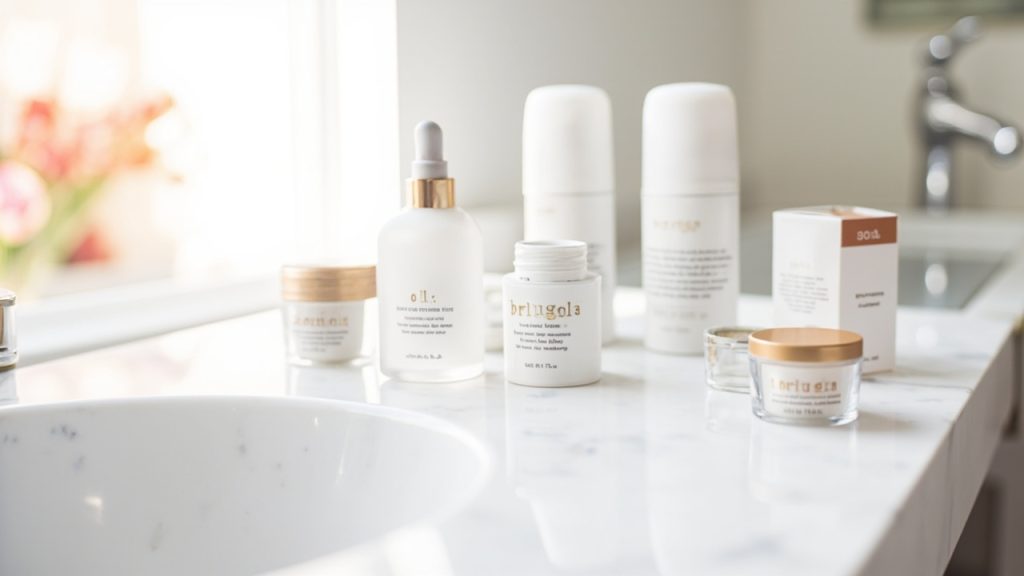
A minimalist routine typically includes:
Gentle cleanser: Start with a cleanser that removes overnight oil and buildup without stripping the skin barrier. A water-based cleanser with minimal surfactants is usually enough.
Antioxidant serum: Apply a lightweight serum with antioxidants, peptides, or calming ingredients. This layer should absorb easily and provide essential nutrients.
Moisturizer with SPF: In 2026, expect to see more emphasis on skin cancer prevention, with daily face and body moisturizers containing SPF 30 or higher.

The Skin-Health Connection
The boundary between skincare and healthcare continues to blur. According to Clarkston Consulting’s 2026 trend analysis, there is a paradigm shift in which skin health is treated as a component of overall wellness rather than a purely cosmetic concern.
This perspective recognizes that skin conditions often reflect internal health factors, including inflammation, hormonal balance, nutrition, and stress. Addressing the root cause — not just the surface symptom — is becoming the standard of care.
Biologics and Personalized Medicine
For people with skin conditions like psoriasis and eczema, 2026 brings significant advances. Eli Lilly released compelling data in February 2026 showing that combining ixekizumab (Taltz) with tirzepatide (Zepbound) in overweight or obese psoriasis patients significantly improved both skin clearance and weight outcomes compared to ixekizumab alone.
This introduces an important intersection of metabolic health and dermatology, recognizing that psoriasis outcomes often correlate with overall metabolic wellness. It is a reminder that caring for your skin sometimes means caring for your whole body.
The Natural Look Movement
Culturally, the aesthetic ideal has moved toward healthy, natural-looking skin rather than an artificially overfilled appearance. Research increasingly shows that the skin barrier recovers and ages better when treated with measured, supportive interventions rather than repeated aggressive damage and repair cycles.
Professional dermatologists are building skin resilience over time rather than pursuing dramatic short-term corrections. The result is a landscape that favors long-term skin health over quick fixes.

Building Your 2026 Skincare Foundation
Know your skin type: Understanding whether your skin is oily, dry, combination, or sensitive is the first step to choosing the right products.
Prioritize sunscreen: Daily SPF 30 or higher remains the single most effective anti-aging and skin cancer prevention step.
Keep it simple: A three-step routine (cleanse, treat, moisturize) is often more effective than a ten-step routine you cannot maintain.
Look for evidence: Choose products with published clinical studies behind their key ingredients.
See a dermatologist: Annual skin checks and professional consultations catch problems early and help you build a routine tailored to your unique skin.
The science of skincare in 2026 is clearer than ever: consistency, simplicity, and evidence-based ingredients are what actually work. Skip the trends and build a routine you can maintain for years, not weeks.