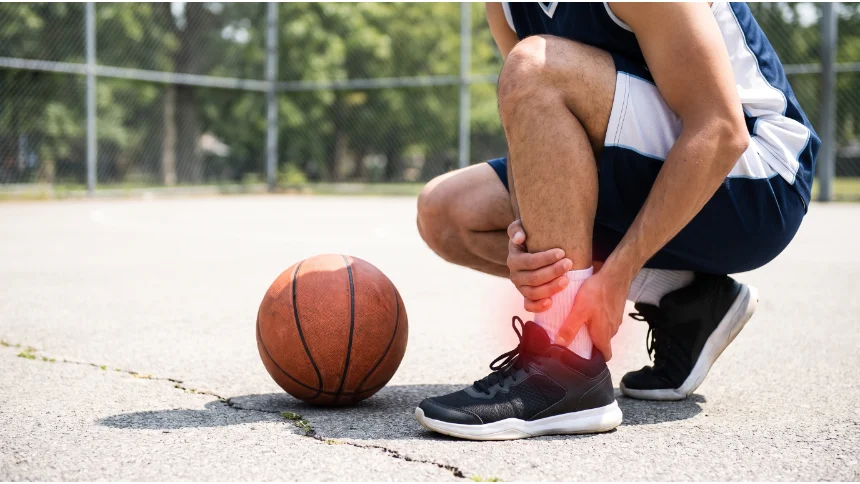
Ankle sprains are the most frequent sports injury, especially common for basketball players. A wrong landing, body collision or tangled footwear can instantly twist your ankle. The actions you take within the first hour of injury directly decide recovery speed — improper handling may extend recovery from two weeks to over two months. Below is standard orthopedic advice for athletes, coaches and parents.
Sprain vs Strain
These two injuries are often confused, yet they damage distinct tissue:
- Sprain: Injury to ligaments (connect bone to bone). Basketball ankle injuries almost always damage outer lateral ankle ligaments when feet roll inward, graded 1 (mild stretch), 2 (partial tear), 3 (full rupture). Ligaments have poor blood supply and heal slower.
- Strain: Damage to muscles or connecting tendons.
Tissue recovery takes time; returning to sports too early creates permanent joint instability.

First 60 Minutes First Aid
The acute injury window demands strict, proper treatment; avoid common wrong moves:
- Stop all activity immediately Do not “walk off” pain. Continuing play stretches damaged ligaments and worsens injury severity.
- Ice the injury correctly Apply ice wrapped in cloth within 20 minutes post-injury, 15–20 minutes per session. No direct ice contact with skin. Avoid heat for the first 48 hours — heat boosts blood flow and swelling.
- Elevate + compress Prop your ankle higher than heart level. Wrap a compression bandage from toes upward, leave enough space to slide one finger under the wrap.
- Never massage swollen area Rubbing damaged tissue increases internal bleeding, bruising and swelling in the acute phase.
When to See a Doctor
Most mild sprains can be cared for at home, but seek urgent medical consultation if you have these symptoms:
- Zero weight-bearing ability on the injured foot (suspected fracture)
- Rapid heavy swelling within 30 minutes of injury
- Sharp tenderness directly on ankle bone sides (X-ray needed to rule out fracture)
- Visible ankle deformity or misaligned joint
- No pain relief after 24–48 hours of rest + ice
Even without red flags, schedule a professional check-up within 72 hours to confirm injury grade and build targeted recovery plans.

Risks of Early Return
Incomplete healing leads to chronic loose ankles. Repeated sprains compound tissue damage, weakening ligament elasticity permanently:
- Grade 1 mild sprain: 1–2 weeks full recovery
- Grade 2 partial tear: 3–6 weeks rehabilitation
- Grade 3 full ligament rupture: 3+ months of rest and therapy
Every repeat sprain adds new damage to unhealed old tissue.
Bracing & Rehabilitation
After acute swelling fades and cleared for light activity, stabilizing gear and training rebuild ankle strength:
- Mild sprain: Professional athletic tape for extra joint support
- Moderate/severe sprain: Lace-up ankle brace, wear continuously for 4–6 weeks back to play
- Must-do training: Single-leg balance drills, calf muscle strengthening, lateral resistance band workouts to restore ankle stability, not just passive rest.
Prevent Future Sprains
Simple daily habits drastically cut injury risk for athletes:
- Full dynamic warm-up + ankle mobility drills before every training or game
- Wear high-top basketball sneakers with firm ankle support, avoid low-cut casual trainers
- Regular stabilizer strength training: calf raises, single leg balance, side band pulls
- Train controlled landing posture with bent knees to reduce ankle torsion
- Prioritize full recovery from past sprains — previous ankle injury sharply raises re-sprain odds
Every step of recovery from your first sprain is the best chance to avoid a second injury.
Small, correct emergency handling and consistent strength training cut long-term ankle damage and keep you back on court safely.