
You do not always need a long workout to fit more movement into your day. A brisk climb up the stairs, a few minutes of bodyweight exercises, or a short, purposeful walk between tasks can all count as opportunities to be active.
These brief bouts are often called “exercise snacks.” The idea is simple: instead of relying entirely on one scheduled workout, you spread short periods of movement throughout the day. For people who sit for long hours or struggle to find time for exercise, this approach may make regular activity feel more achievable.
But can a few minutes at a time actually improve fitness? Research suggests they can help, particularly with cardiorespiratory fitness in previously inactive adults. The results depend on how often you move, how challenging the activity is, and what outcome you want to improve.
What Counts as an Exercise Snack?
An exercise snack is a short, intentional bout of physical activity performed separately from a longer workout. It may last just one to five minutes, although definitions and study protocols vary.
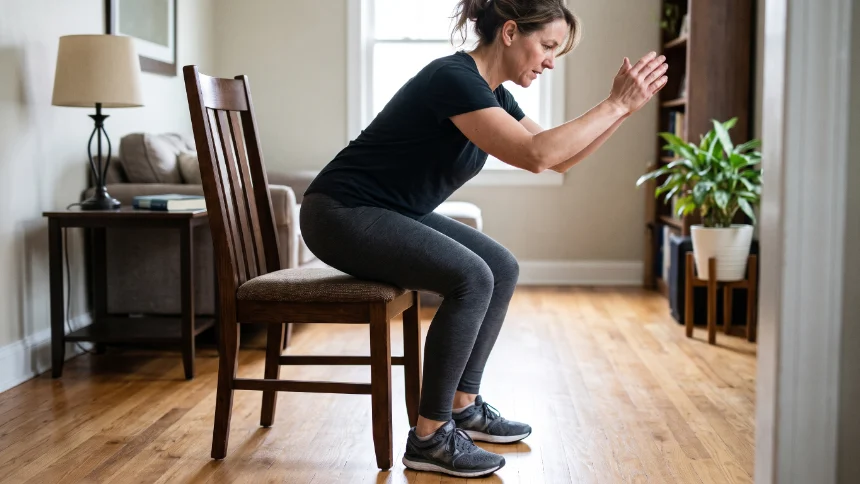
Examples include walking briskly around the building, climbing a few flights of stairs, doing repeated sit-to-stands from a sturdy chair, or performing a short series of bodyweight movements. The activity should fit your current ability and the space available.
Not every movement break needs to be intense. Standing up, walking around, and gently moving stiff joints can help interrupt long periods of sitting. More challenging bouts may provide a stronger training stimulus, but they are not necessary for every person or every break.
The important distinction is that an exercise snack is planned movement, not a special technique or a particular branded workout.
Can Short Bouts Improve Fitness?
A 2026 systematic review and meta-analysis of randomized controlled trials examined brief exercise bouts in physically inactive adults and older adults. The researchers found improvements in cardiorespiratory fitness among adults who completed exercise-snack programs. Some evidence also suggested improved muscular endurance in older adults, although confidence in that finding was limited.
The studies were relatively small and used different activities, intensities, and schedules. The findings are encouraging, but they do not establish that every short movement break will produce the same result.
For cardiorespiratory fitness to improve, your body generally needs repeated opportunities to work hard enough to challenge the heart and lungs. A few minutes of brisk stair climbing may provide a different stimulus from a slow stroll around the room.
Short sessions can also make it easier to practice movements consistently. However, exercise snacks have not been shown to reliably improve every measure of health. Current evidence does not establish that they consistently reduce body fat, lower blood pressure, or improve blood lipids.

How to Build Exercise Snacks Into Your Day
You do not need to redesign your entire schedule. Start by identifying times when you are already changing tasks or taking a break, then attach a small amount of movement to those moments.
- After a long period of sitting: Walk around your home or office for two to five minutes.
- Between work tasks: Try repeated sit-to-stands from a stable chair or a short set of wall push-ups.
- When stairs are available: Walk up a flight or two at a pace that feels challenging but controlled. Use the handrail if needed.
- During a longer break: Take a brisk walk outdoors rather than remaining seated throughout the break.
Choose activities that are easy to repeat in your actual environment. If you work from home, walking while a document loads or doing a few sit-to-stands between meetings may be more realistic than changing into workout clothes several times a day.
There is no single schedule that suits everyone. You could begin with two or three brief movement breaks a day and add more when the habit feels manageable. Research protocols vary, so there is no universally established minimum number of snacks that guarantees a fitness benefit.
How Hard Should Each Session Feel?
Intensity should match the activity and your current fitness. For a moderate effort, you should notice that your breathing and heart rate increase while still being able to talk in sentences. During vigorous activity, speaking becomes more difficult.
If you are new to exercise, start with comfortable walking, gentle stair climbing, or controlled bodyweight movements. You can gradually increase the pace, duration, or number of repetitions as your capacity improves.
Short does not have to mean all-out. Some research on exercise snacks has used vigorous or near-maximal efforts, but those protocols are not a suitable starting point for everyone. Very intense stair sprints or rapid repetitions may increase the risk of falls, joint strain, or excessive fatigue in people who are unprepared for them.
For strength-focused snacks, prioritize controlled technique over speed. Use a stable chair for sit-to-stands, keep wall push-ups at a comfortable angle, and stop a set when you can no longer maintain good form.
Exercise Snacks Versus a Traditional Workout
Short bouts can be useful, but they are not automatically equivalent to a complete exercise program. A longer walk, cycling session, swim, or structured workout may be easier to organize when you want to develop endurance, practice a sport, or follow a progressive training plan.
Adults are generally encouraged to work toward at least 150 minutes of moderate-intensity aerobic activity per week, or 75 minutes of vigorous activity, or an equivalent combination. Muscle-strengthening activities are also recommended on at least two days a week. These are weekly targets to work toward, not a requirement to complete every session in one block.
Activity accumulated in short bouts can contribute to your overall movement. If several brief walks add up across the day, they still count as physical activity. The key is the total amount, intensity, and variety of movement over time.
For people who already exercise regularly, snacks can supplement an existing routine by adding movement between workouts. They should not be treated as a guaranteed replacement for the longer aerobic or resistance-training sessions needed to meet individual goals.
What About Breaking Up Long Periods of Sitting?
Exercise snacks may be especially practical for people whose work involves prolonged sitting. A short walk or a few minutes of movement creates an opportunity to interrupt that pattern without requiring a gym, special clothing, or a large block of free time.
Studies of brief activity breaks have explored effects on fitness and on measures such as blood glucose after meals. Results vary according to the activity, population, timing, and outcome measured. A short movement break should not be assumed to cancel out all the effects of sitting for the rest of the day.
Think of movement breaks as one useful part of an active routine. Regular walks, planned workouts, adequate recovery, and less uninterrupted sitting can complement one another.
Who Should Start More Carefully?
For many people, gentle walking and ordinary movement breaks are accessible ways to begin moving more. However, high-intensity efforts are not appropriate for everyone, especially if you have been inactive for a long time or have a condition that affects exercise tolerance.
Start at a level that feels manageable, use secure surfaces and handrails when appropriate, and increase effort gradually. If you have a chronic health condition, significant balance problems, or symptoms that concern you during activity, ask a healthcare professional what type and intensity of exercise are suitable.
Stop exercising and seek urgent medical help if you experience chest pain, fainting, or severe, unusual shortness of breath. Do not try to push through warning symptoms simply because the session is brief.
Make Small Sessions Repeatable
The biggest advantage of exercise snacks may be practical: they reduce the need to find one uninterrupted block of time. A short activity that fits naturally into your day can be easier to repeat than an ambitious plan that repeatedly gets postponed.
Choose one movement you enjoy or find convenient, connect it to a daily cue, and repeat it for a week. Once it becomes familiar, add another opportunity or make the activity slightly more challenging. Consistency matters more than making every session intense.
A few minutes of movement will not solve every fitness goal, but they can be a realistic starting point. Over time, these small sessions can help you move more often and may improve cardiorespiratory fitness when they provide a sufficient, repeated challenge.