
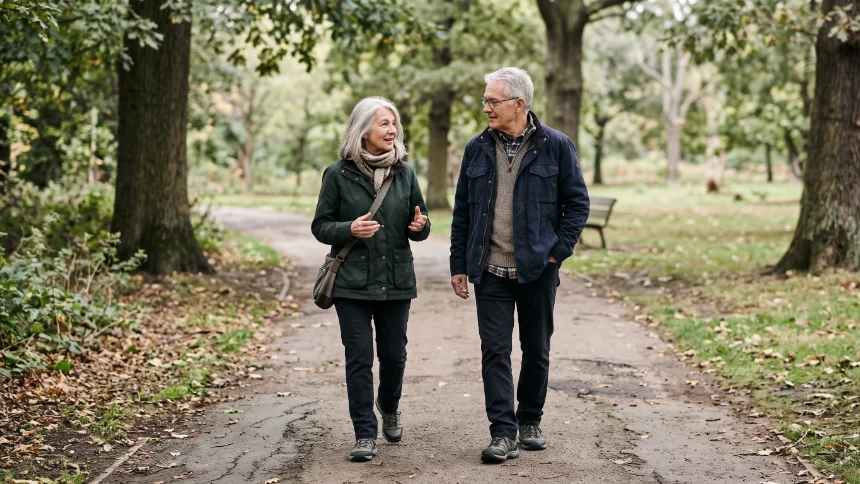
Longevity is often discussed in terms of diet, exercise, sleep, and medical care. But another part of healthy aging can be easier to overlook: the relationships we maintain with other people.
Friends, family members, neighbors, colleagues, and community groups can provide companionship, practical help, and a sense of belonging. Research has linked stronger social connections with several aspects of health, including psychological well-being and cognitive function. The evidence is not a promise that socializing will make someone live longer, but it suggests that relationships deserve a place in conversations about aging well.
What Does Social Connection Actually Mean?
Social connection is more than the number of people in your contact list. It can include how often you interact with others, whether you feel supported, how involved you are in meaningful activities, and whether you have people you can turn to when life becomes difficult.
Researchers sometimes distinguish social isolation from loneliness. Social isolation generally refers to having limited social contact or a small social network. Loneliness is the subjective feeling that your relationships do not provide the connection you want. A person can live alone without feeling lonely, while someone surrounded by people may still feel disconnected.
This distinction matters because the same social arrangement does not affect everyone in the same way. Some people enjoy frequent group activities; others feel most connected through a few close relationships. Healthy social connection is not about meeting a universal quota of friends or conversations.
What Recent Research Found
A 2026 longitudinal study published in The Lancet Healthy Longevity examined social connection and intrinsic capacity among 39,021 adults aged 50 and older across several international aging cohorts, including participants from China, Japan, the United States, England, and Europe.
Intrinsic capacity is a broad concept used to describe a person’s combined physical and mental abilities. It includes areas such as mobility, cognition, psychological well-being, sensory function, and vitality.
The researchers found that stronger social connection was associated with higher intrinsic capacity at the beginning of the study. The most consistent associations involved psychological well-being and cognition, with a smaller association involving mobility. Participation in social activities was one of the components most consistently linked with higher intrinsic capacity.
However, the study did not find clear evidence that stronger social connection at baseline predicted a slower rate of intrinsic capacity decline over the follow-up period. This is an important limitation. The findings support an association between connection and better functioning, but they do not prove that increasing social contact will prevent age-related decline.
People who are healthier may also find it easier to maintain relationships and participate in activities. Social connection and health can influence each other, and other factors may affect both.

How Relationships May Support Healthy Aging
Although the exact effects differ from person to person, there are several plausible ways that social relationships may support well-being as people age.
Emotional support. Talking with someone who listens can help people cope with stressful experiences. Feeling understood may reduce the sense of facing difficulties alone, even when a problem cannot be immediately solved.
Mental engagement. Conversations, shared hobbies, games, and group activities can encourage people to think, remember, communicate, and learn. These activities can be enjoyable in their own right. They should not be treated as a guaranteed way to prevent dementia.
Everyday motivation. A walking partner, exercise class, or regular community activity can make it easier to leave the house and maintain routines. Social plans may provide a gentle reason to stay active, particularly when motivation is low.
Practical help. Relationships can offer assistance with transportation, meals, appointments, or everyday tasks during periods of illness or reduced mobility. This kind of support may help people remain connected to their communities.
These pathways are not automatic. Relationships can also be stressful, demanding, or harmful. The quality and safety of a relationship matter more than simply being around other people.
Is Loneliness the Same as Being Alone?
No. Spending time alone can be restorative, and living independently does not automatically mean a person is socially isolated. Some people prefer a small circle of friends and feel satisfied with relatively little social contact.
Loneliness is more about the gap between the connection a person wants and what they experience. Someone may have frequent social interactions but still feel that nobody understands them. Another person may spend considerable time alone and feel content because their relationships are meaningful and reliable.
It is therefore unhelpful to judge social health only by household size, marital status, or the number of invitations someone receives. A more useful question is whether a person has the kind of connection that feels supportive and meaningful to them.
Simple Ways to Build More Connection
Improving social connection does not require a packed calendar or a dramatic lifestyle change. Small, repeatable actions can help create more opportunities for contact.
- Arrange a regular check-in. Set up a weekly phone call, video chat, or walk with someone you enjoy speaking with.
- Choose an activity with a shared purpose. A gardening group, book club, cooking class, walking group, or volunteer project can make conversation feel more natural.
- Reconnect gradually. Send a short message to an old friend or relative. You do not need to explain every gap in contact before starting a conversation.
- Make everyday interactions count. Greeting a neighbor, chatting with a familiar shopkeeper, or talking with colleagues can add small moments of connection to a normal day.
- Use technology when distance is a barrier. Messages and video calls can help people stay in touch when travel, mobility, or geography makes meeting difficult.
Choose an approach that fits your personality, energy, mobility, and schedule. If social situations feel overwhelming, a short one-to-one conversation may be a more comfortable first step than a large group event.

What If Making Friends Feels Difficult?
Building relationships can become harder after retirement, relocation, bereavement, illness, or changes in mobility. Some people also face language barriers, financial limitations, caregiving demands, or a lack of accessible community spaces. These challenges should not be reduced to a personal failure to socialize.
Start with settings that offer a reason to meet repeatedly. Shared activities can reduce the pressure to make conversation from scratch, and familiar faces may make future interactions more comfortable. Local libraries, community centers, adult learning programs, volunteer organizations, and interest-based groups may offer opportunities, depending on where you live.
If loneliness is persistent and affects your mood or daily life, talking with a healthcare professional or mental health provider may help. They can explore other factors that may be contributing, including depression, anxiety, grief, or changes in health.
It is also important to respect boundaries. You do not have to maintain relationships that are abusive, consistently demeaning, or unsafe simply to avoid being alone. Supportive connection should contribute to your well-being, not undermine it.
Social Connection Is One Part of the Bigger Picture
Relationships cannot replace medical care, physical activity, adequate nutrition, sleep, or preventive health measures. They are better understood as one component of a broader approach to healthy aging.
Likewise, no single habit can guarantee a longer life. Research on longevity involves many interacting factors, and the results of population studies do not determine what will happen to any one person.
A practical goal is to build a life that supports both physical function and emotional well-being. That may mean maintaining a few close relationships, participating in a group you enjoy, making time for family, or finding a community activity that gives your week a sense of rhythm.
Growing older does not require becoming more social than you naturally want to be. It does offer a reason to pay attention to whether you feel connected, supported, and involved in the parts of life that matter to you.
Healthy aging is not only about how many years you live. It is also about the quality of those years—and the people, activities, and relationships that help make them meaningful.