If you’re a parent of active school-age kids, you know that frustrating afternoon meltdown. One minute everything is fine, then suddenly your child turns irritable, cranky or drained — and you can’t pinpoint why. Many parents blame tiredness, screen time or school stress, but a common hidden trigger lies in what kids eat between meals.
Kids burn massive energy running at recess, sports practice and playdates. Their small stomachs empty fast, so hunger creeps in quickly. Snacks aren’t just treats. They fill energy gaps between meals and help growing kids stay focused and active. No fancy meal prep or perfect bento boxes required. Simple staple foods are enough to handle sudden hunger spikes.
Quick Self‑Check: Is Your Kid Not Getting Enough Fuel Between Meals?
- Gets cranky, moody or easily frustrated within two hours after finishing a meal
- Runs out of energy fast during PE, playground time or sports practice
- Comes home completely exhausted, even without heavy physical activity
- Keeps begging for sugary snacks the moment hunger hits
- Often feels thirsty, tired or sluggish after outdoor play
- Lunchbox food gets finished quickly, complains of hunger before school ends
If three or more points sound familiar, your child may need better‑balanced snacks and hydration between meals. This is not about forcing them to eat more food. It means adjusting what you offer, to match their body’s real‑life energy needs.
What Active Growing Kids Actually Need For In‑Meal Fuel
Children are constantly growing and moving, so their nutrition demands are higher than many people realize. Since their stomach size is small, large heavy meals don’t work well. Spreading nutrition out through smaller bites throughout the day makes far more sense.
Treat snacks like another chance to add good nutrition, not just junk food to kill hunger. Aim to mix carbs, protein, healthy fat plus fiber from whole foods. Fruits, veggies, plain yogurt, cheese, whole‑grain crackers, nut or seed butters are all solid picks.
Hydration counts just as much. Kids lose water and electrolytes when they sweat from running and playing. Plain water should always be the first choice. Sometimes whole‑food‑based drink options can help top‑up hydration on busy, high‑activity days.
And here is the most practical rule of all: no matter how nutrient‑dense a snack is, it’s useless if your kid refuses to touch it. Balance nutrition with foods they will actually enjoy eating.
Easy Playbook: 5 No‑fuss Snack Rules For Busy Families
Let’s be honest. Social media shows beautiful, perfectly arranged kid food. Real‑life parenting looks different. Breakfast can get barely touched because you are hunting for missing socks. Sports practice starts right after school ends. You rush from pickup to appointments with zero time to stop for food.
You don’t have to become a master meal prepper. These simple strategies make healthy choices the easiest choices on chaotic days.

1. Follow the “Pick Two” Simple Rule
When you stare into the fridge with no idea what to give, keep it dead simple: pick foods from two different food groups. You do not need complicated mini feasts. Simple combinations:
- Fresh fruit + yogurt
- Whole‑grain crackers + cheese
- Banana + nut or seed butter
- Raw veggies + hummus
This formula creates filling, balanced snacks without lots of planning.
2. Build A Kid‑Reachable Snack Station
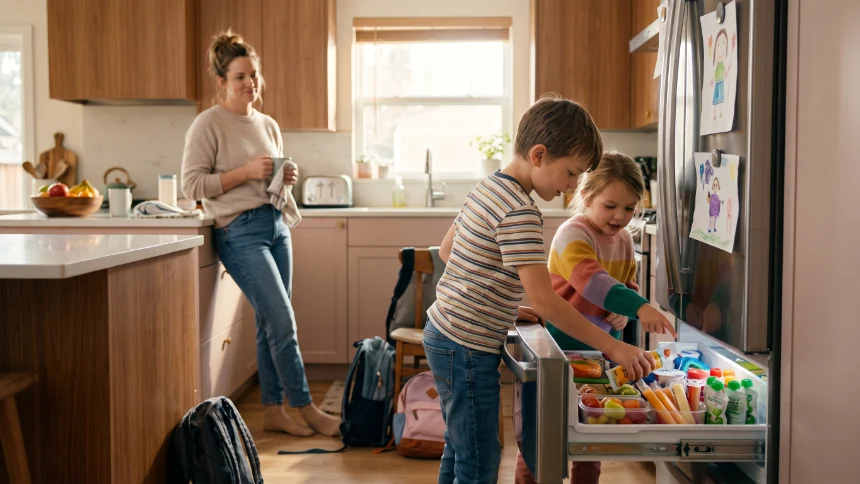
Make good food easy for kids to find. Set aside one fridge shelf, a drawer or a basket for parent‑approved snacks they can grab by themselves. Stock it with fruit, cut‑up veggies, yogurt, cheese or portable bars suitable for their age.
This cuts down constant “what can I eat?” questions. It also lets children feel some control over their own eating.
3. Pack Food For That “Second Wave Of Hunger”
You have packed lunch — great. But many kids get hungry again a few hours after lunch. If your child joins sports, playdates or has a long commute home, prepare extra food for that post‑school hunger window. Shelf‑stable snacks can stay inside backpacks or your daily bag. Keep chilled portable options ready to grab on your way out of school pickup. You will thank yourself when your kid is starving outside soccer training.
4. Pair Snacks Together With Drinks
Make hydration part of snack time, not something you remember randomly. Before heading out, fill their water bottle and grab a snack at the same time. Water stays your main hydration source. On extra‑active days, whole‑food electrolyte drinks can help replace what is lost through sweat.

5. Keep Emergency Snack Stashes Handy
Some days your schedule totally falls apart. Store shelf‑stable snacks wherever hunger tends to pop up: your car, handbag, stroller or kid’s backpack. Options can include grain bars, whole‑grain crackers or dried fruit that your child happily eats. These backups save you from last‑minute meltdowns caused by sudden hunger.
There’s no requirement to craft elaborate homemade snacks every single day. Parenting happens in messy, rushed moments. Start small, test one new habit this week, tweak things as you learn what works best for your family.