Packing school snacks every morning can feel like a never‑ending puzzle. You want something nutritious, kid‑friendly, quick to assemble, and safe for classroom rules. No fancy specialty grocery runs, no complicated gourmet prep.
A bad snack pick leads to mid‑morning energy crashes, cranky moods, and half‑eaten lunchboxes coming back home day after day.
Today we break down the simple balanced‑snack formula, walk through 25 real‑world snack combinations parents can copy, share how to pick store‑bought options, age‑specific packing tips, plus a quick self‑check checklist for you to run through before closing the lunchbox.
What Makes A Great Balanced School Snack?
A school snack doesn’t need to be a full mini‑meal. Its main job is bridging the energy gap between breakfast, lunch and after‑school activities.
The super simple formula: colorful fruit / vegetable / whole grain + protein / dairy / healthy fat.
Fruits, veggies and whole grains bring fiber, color and crunch. Adding protein, dairy or healthy fat keeps kids full longer and prevents quick sugar ups‑and‑downs throughout class time. Protein can come from animal or plant sources: eggs, beans, lentils, seeds, soy products and more.
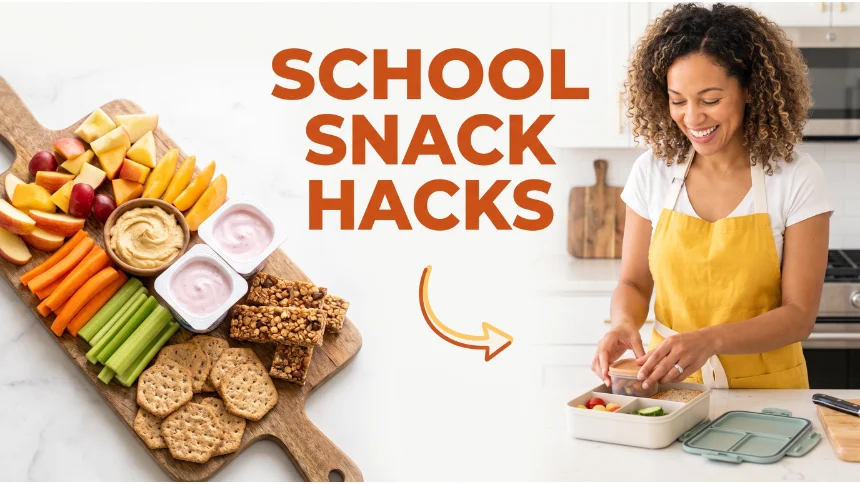
Great real‑life examples: apple slices paired with cheese, whole‑grain crackers plus hummus, Greek yogurt mixed with berries, banana with seed butter.
Before tossing it into the bag, run through these quick questions for self‑check: ‑ Can my kid open this container all by themselves? ‑ Does this food need an ice pack to stay safe? ‑ Does it fit my school’s food‑allergy policy?
The best school snack is not the one with the most perfect nutrition label — it is the one your child will actually eat at school.

Save This List: 25 Practical Balanced School Snacks
All of these follow the balanced snack formula. Mark which ones need cold packs, stick to your kid’s favourites, repeat what gets finished — repetition is a win, not a rut.
Quick Pantry Backups (no ice pack required)
Perfect for rushed mornings, emergency backpack spares or days when your fridge is nearly empty.
- Banana + sunflower seed butter
- Whole pear + whole‑grain crackers
- Roasted chickpeas + orange slices
- Rice cake + seed butter
- Whole‑grain cereal mix + dried fruit
Cold‑Pack Combos (must use insulated lunch bag with ice pack)
These work great for yogurt, cheese, hummus and fresh cut produce.
- Apple slices + cheese stick
- Mandarin orange + Greek yogurt
- Berries + cottage cheese
- Unsweetened applesauce pouch + cheese cubes
- Safely‑cut grapes + turkey roll‑ups
- Juice‑packed fruit cup + string cheese
- Whole‑grain crackers + hummus cup
- Bell pepper strips + hummus
- Mini pita + guacamole
- Snap peas + yogurt‑based dip
- Edamame + whole‑grain crackers
More Filling Picks For Long School & Activity Days
Use these when there is a long gap between meals or your kid comes home extremely hungry. Some still require cold packs.
- Cucumber slices + turkey or chicken roll‑ups
- Greek yogurt + low‑sugar granola
- Mini whole‑grain bagel + cream cheese
- Hard‑boiled egg + fresh fruit
- Mini turkey‑and‑cheese wrap
- Cottage cheese + peach slices
- Leftover chicken strips + crackers
- Smoothie pouch + cheese stick
- Oat snack bites + yogurt tube
Quick safety reminder: For younger kids, cut round or firm foods into small safe pieces to lower choking risk. Always double‑check classroom allergy rules before packing nuts, seed butter, dairy, egg or sesame‑containing foods. For perishable items, always add an ice pack inside your insulated lunch bag.

How To Choose Healthy Store‑Bought School Snacks
Pre‑packaged snacks are lifesavers for chaotic back‑to‑school weeks. You do not need to hunt for “perfect” packaged products, just ones that fit your kid’s appetite, school rules and your morning schedule.
Start reading nutrition labels with these three focus points:
- Fiber: Look for whole grains, beans, fruit or vegetable ingredients. Most children do not eat enough dietary fiber day‑to‑day.
- Added sugar: Compare across granola bars, flavoured yogurts and fruit snacks. Too much added sugar causes sharp energy spikes followed by big crashes.
- Sodium: Watch crackers, jerky, cheese snacks and dips. Kids have much lower sodium limits than adults.
Good shelf‑stable store‑bought picks: unsweetened applesauce pouches, freeze‑dried fruit, whole‑grain cracker packs, low‑sugar granola bars, roasted chickpea packs, whole‑grain pretzels.
Good cold‑ready store‑bought picks: yogurt tubes, cheese sticks, hummus cups, guacamole cups, hard‑boiled egg packs, smoothie pouches.
Packing Guide For Different Age Groups
Younger kids (around age 5)
Keep everything simple, easy‑to‑chew and easy to open by small hands. Chop round firm fruits and vegetables. Avoid whole grapes, popcorn, loose nuts, thick big blobs of seed or nut butter, raw hard carrot sticks which carry higher choking hazards.
Pre‑teen kids (around age 12)
You can serve more substantial portions. Let them join in picking and even packing their own snack combinations: hummus with pita and veggies, yogurt‑granola mixes, small turkey wraps, cheese plus fruit and crackers.
General rule for every age: only pack food your child knows how to open and finish within their short school snack break.
Important Checks Before You Seal The Lunchbox
Even well‑balanced snacks can turn unsafe without proper handling. ‑ Use insulated lunch bags plus ice packs for perishable food like dairy, deli meat, cooked chicken, cut fruit and hummus. Bacteria multiply fast in room‑temperature danger zones. Children under 5 have weaker immune systems and are extra vulnerable to food‑borne sickness. ‑ Read allergy warnings on every package. Schools commonly monitor nine major food allergens. Note that “may contain” advisory text is not legally required, so read full ingredient lists carefully. ‑ Quick daily routine tip: Wash fresh produce before packing, seal dips inside tight containers, teach kids to throw away leftover cold‑required food, and regularly clean lunch boxes. Doing small prep work on weekends cuts down morning chaos a lot.
Frequently Asked Quick Answers
Q: What are simple healthy snacks I can send to school? A: Classic solid combinations include fruit plus cheese, whole‑grain crackers with hummus, berries with yogurt, cucumber‑turkey rolls, applesauce paired with cheese sticks. Mix produce, whole grains, protein or dairy together.
Q: Are packaged snacks okay for school lunches? A: Absolutely, they help a great deal on busy mornings. Just compare nutrition labels focusing on serving size, fiber, added sugar and sodium.
Q: What are easy healthy after‑school snacks? A: After‑school snacks can be slightly bigger than in‑school snacks. Try smoothies, mini sandwiches, egg‑toast combos, hummus‑pita plates or safe leftover dinner foods.
Q: What foods should I avoid packing for little kids? A: Skip or re‑prepare high‑choking‑risk items: whole grapes, popcorn, loose nuts, raw hard carrot sticks, large thick blobs of nut or seed butter, big chunks of meat or cheese.
Final Takeaway
School snacks do not need to look fancy or perfect.
Stick to the simple formula: fruit / vegetable / whole grain plus protein, dairy or healthy fat. Adjust portions, food choices and safety prep for your child’s age, respect school allergy rules, and work with your real‑life lunchbox situation.
Build a short go‑to snack list your kid actually enjoys, keep a few trusted store‑bought backups for chaotic rushed mornings. That is real‑world school‑snack success.